

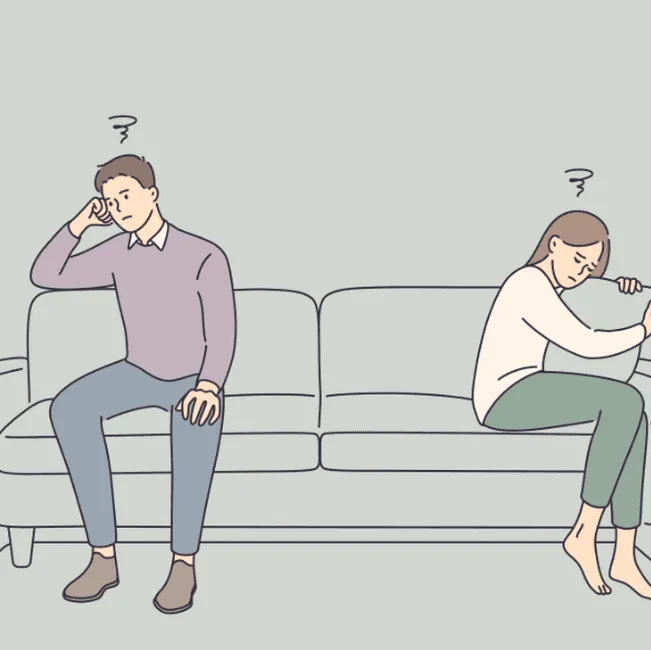
Every relationship that lasts has disagreements in it. With a partner, a parent, a child, a co-founder. Disagreeing is not the danger. The danger is the quiet switch that happens partway through, when two people who started out trying to fix something end up trying to beat each other.
Why does an argument turn into a fight?
When something lands as an attack, the mind stops solving and starts defending. That shift happens fast, and it is rarely a choice.
What usually triggers it is the difference between a verdict and a description. “You always do this” is a verdict on someone’s character. “This happened, and it bothered me” is a description of one event. A verdict leaves the other person nothing to do except defend themselves. A description gives them something to work with.
Once defence mode starts, the original issue stops mattering. The argument is no longer about the dishes or the deadline. It is about not losing.
What does “fight the problem, not the person” actually mean?
It means treating the issue as something the two of you are looking at together, not something one person is doing to the other. The same shift works in every relationship:
- With a parent: “You never respected my choices” becomes “I’ve felt unheard on this one decision, and I want to understand why.”
- With a partner: “You don’t care about this family” becomes “I think we see this differently, and I want to figure out why.”
- With a child: “You never listen to me” becomes “I’ve asked you twice now, and I want to understand what’s making this hard for you.”
- With a coworker: “You dropped the ball again” becomes “This deadline slipped. Let’s figure out what happened.”
In the first version of each, the other person has to defend themselves before anything else can happen. In the second, they can think about the problem alongside you.
What does this look like in practice?
It is rarely one big technique. A few small, specific shifts carry most of the weight: describing the event instead of the person, staying with one issue at a time, asking what it meant to them before explaining what you meant, and noticing the moment your own voice changes.
Across 500+ advisory sessions, the most common pattern is not a communication skills gap. It is two people trying to solve the same problem who end up standing on opposite sides of it.
Why doesn’t “just communicate better” fix this on its own?
Communication skills assume both people already feel like they are on the same team. They help with phrasing. They do not touch the belief that made someone feel they had to defend themselves in the first place.
Underneath most fights sits a belief such as “conflict means this relationship is at risk” or “if I’m wrong about this small thing, I’m wrong as a person.” While that belief is running, even perfect words come out sounding defensive. Name the belief, not just the behaviour, and better words tend to follow on their own.
Try it this week
The next time a disagreement starts to turn, pause and ask yourself one question: “Am I trying to solve this with them, or win this against them?”
You don’t need to fix the whole conversation. Just notice the moment it shifts.
The problem was never the enemy
Disagreements are not what damages a relationship. What damages it is forgetting, in the heat of being upset, that the person across from you is not the problem. They are the person you are solving it with.
Frequently asked
How do I stop an argument from turning personal?
Catch the shift early, at the moment the conversation moves from a specific event to a verdict on someone’s character. Bringing it back to the specific event keeps the conversation solvable.
Does this work with a parent, not just a partner?
Yes. The same shift applies anywhere the relationship matters more than winning this particular disagreement. Only the history underneath it is different.
What if the other person is the one making it personal?
You can’t control their side, but you can control yours. Staying on the problem and not counter-attacking often changes the tone of the whole conversation.
If this sounds like a pattern you recognise, start with one private conversation.
Book a confidential call